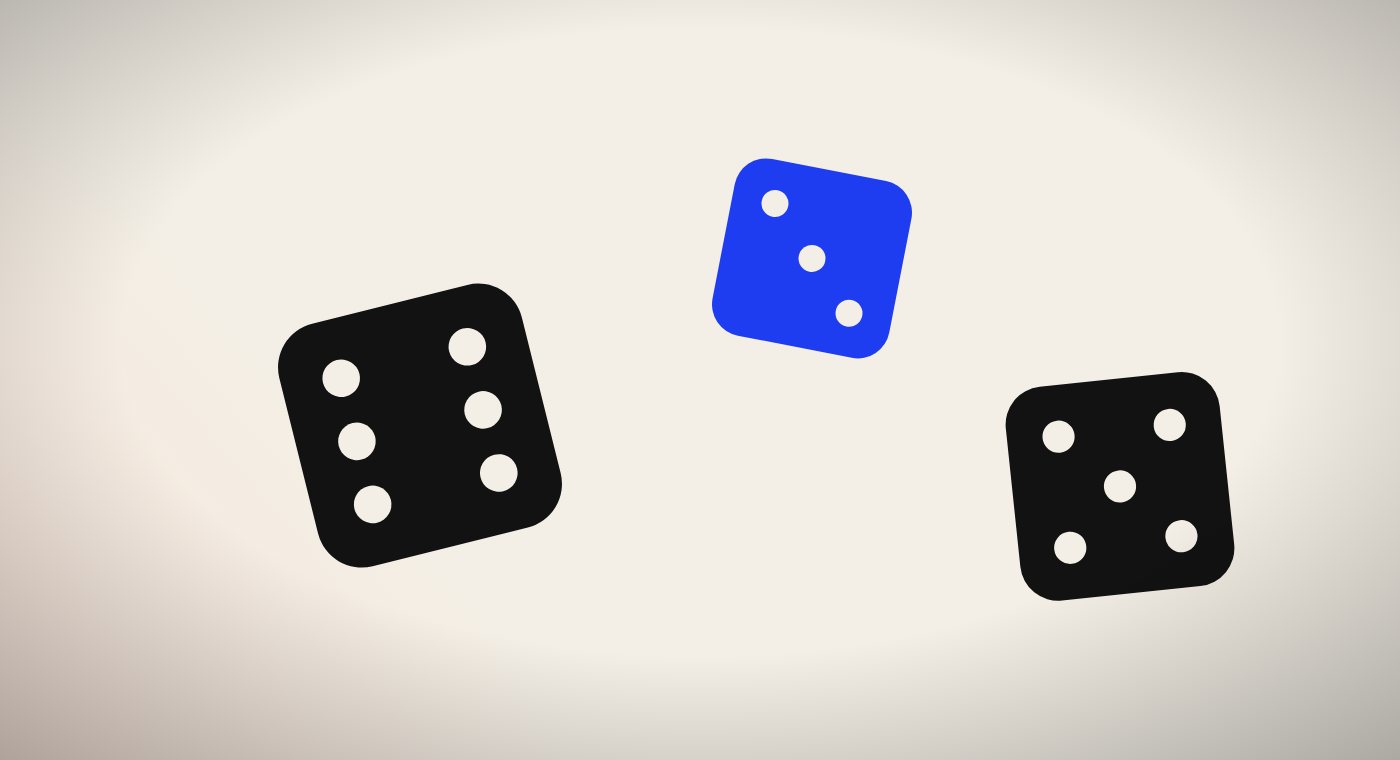
Ludo uses one die, so the probability is as simple as probability gets. That simplicity is useful: a handful of numbers, memorised, will improve your decisions immediately.
The base numbers
Each face has a 1 in 6 chance, about 16.7%. From that, everything follows.
- Chance of a six on one roll: 16.7%
- Chance of no six in three rolls: (5/6)³ ≈ 57.9%
- Chance of at least one six in three rolls: ≈ 42.1%
- Chance of at least one six in six rolls: ≈ 66.5%
- Rolls needed on average to see a six: 6
That last figure is the one people misjudge. Six rolls is the average, not the typical experience. Going twelve rolls without a six happens about 11% of the time — roughly one game in nine. It is not the app cheating.
Capture exposure
This is the practical application. A token sitting n squares ahead of an opponent’s token can be captured if they roll exactly n, where n is 1 to 6.
So a single opponent token behind you within range gives a 16.7% chance of capture on their next roll. Simple enough. The useful part is what happens with several.
| Opponent tokens in range | Capture chance per round |
|---|---|
| 1 | 16.7% |
| 2 (different distances) | 30.6% |
| 3 (different distances) | 42.1% |
| 4 (different distances) | 51.8% |
Three opponent tokens within striking distance means a coin flip every time the board comes around. That is the number to carry in your head: three threats is roughly even odds. At that point, moving to safety is almost always correct even if it costs tempo.
Note the “different distances” qualifier. Two opponent tokens both exactly four squares behind you are a single threat, not two — one roll of four captures with either, so the chance stays 16.7%.
Finishing exactly
Most rule sets require an exact roll to enter home. A token needing exactly three has a 16.7% chance per turn, so on average six turns of waiting. A token needing one to six — anywhere in that window — gets home on the next roll regardless.
The implication: do not advance a token to within one or two squares of home early unless you must. A token sitting seven squares out has more useful rolls available than one sitting two squares out. Park tokens at different distances so that most rolls advance something.
The three-sixes rule
Where it applies, rolling three consecutive sixes forfeits the turn. The chance of that is (1/6)³ ≈ 0.46%, about one turn in 216. Rare enough to ignore in planning, common enough to see a few times a year.
What the maths does not say
None of this tells you which token to move — that is positional judgement. What it does is calibrate your sense of risk. Most players overestimate the danger of one threat and badly underestimate the danger of three. Fixing that single miscalibration is worth more than any other single improvement to your game.
Count the threats behind you before every move. It takes two seconds and it is the closest thing Ludo has to a skill ceiling.